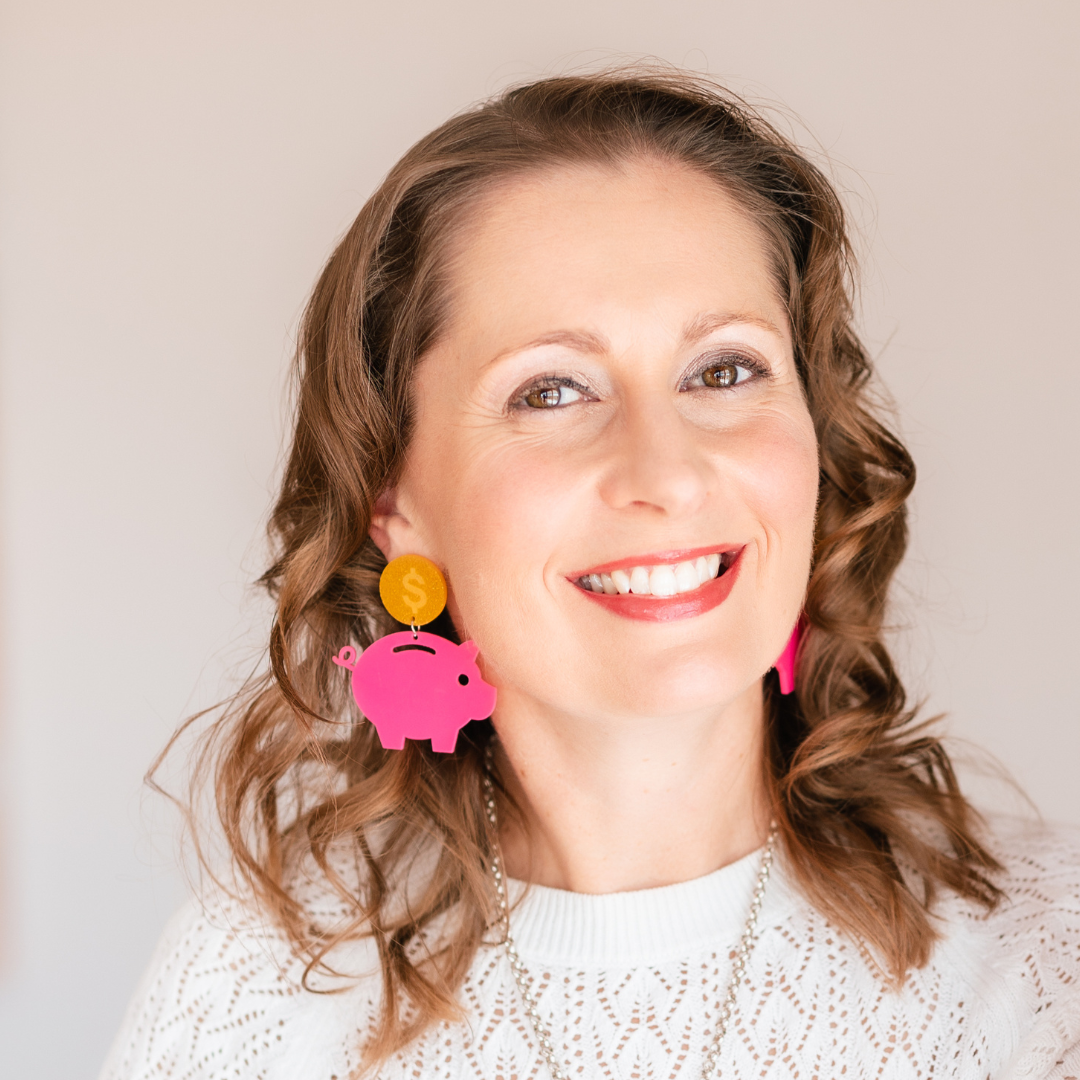
Share Trading is Also for Women!
A few weeks ago I had a conversation that's stuck with me since, and not just because of the investing strategy we talked about. It was something my guest, Kaki Lee, mentioned about a comment she'd received recently. She'd asked a question in a Facebook group and someone told her, straight up, that share trading isn't for women.
I can't believe we're sitting here in 2026 and that's still a sentence someone typed into a public forum. But if I'm honest, it didn't surprise me either. It just made me angry (even though I know I should just ignore those sort of opinions!).
I've told this story before, but it's worth repeating here. Twenty-odd years ago, when I was working as an accountant, I went to a breakfast at the Tattersalls Club with the partner I worked for. Women had only recently been allowed to become members. I was the only woman in the room, and a young one at that. I remember the looks. I remember the feeling in that room, that I didn't quite belong there, even though the partner I was with made a point of telling me I did. That feeling doesn't just disappear because the rules changed. The memory is there. And for a lot of us, that same feeling shows up the second we think about buying shares, opening an investment account, or admitting we don't really understand what a covered call is.
Back to Kaki and what she is doing and how she is disrupting the share trading education space (even though that's not what she set out specifically to do).
From chief pharmacist to Cashflow Queen
Kaki had a 20-year career in pharmacy. She worked her way up to chief pharmacist at a children's hospital in Perth, which is not a small achievement. When she had her second daughter, she'd already bought a share trading course the year before, and true to her Type A nature, she started working through it almost immediately after giving birth. Her trading coach called her at one point and asked where she was, because something sounded different. She told him she'd just had a baby. He asked why on earth she was calling him from the hospital!
Within six months of starting this particular strategy, called covered calls, she'd replaced her chief pharmacist income. Not once, but consistently, month after month. She waited to see if she could sustain it before she made any big decisions, and once she knew she could, she left her pharmacy career.
Among Kaki's many talents and experience, she was also a Life Coach, and says that trading success is 80% mindset and energy, and only 20% strategy. That's not what you'd expect to hear from someone teaching a specific investing strategy. Most courses teach you the technical stuff and then chuck in one throwaway line about "working on your mindset," without ever telling you what that actually means or how to do it. Kaki built her whole program, Cashflow Queen, around fixing that gap.
What a covered call actually is, in plain English
I'm not going to pretend I'm the expert on this strategy, that's Kaki's world, not mine. But here's the plain English version she gave me. You buy a stock, and then you sell a contract that basically says, "I'll sell you this stock at this price, within this time frame, if you want it." In exchange for offering that, someone pays you money upfront, called a premium. Kaki likened it to a deposit or a lay-by. You get paid regardless of whether the buyer takes you up on the sale.
What I found genuinely reassuring is that Kaki also teaches her students to buy a kind of insurance within the strategy, which can protect up to 95% of their capital if things go the wrong way. That's a very different conversation to the "put it all in and hope" version of investing that scares most of us off in the first place.
She trades on the US market rather than the ASX, because there are simply more opportunities. Around 200 shares in Australia work for this strategy, compared to over 5,000 in the US.
How much money do you actually need?
This is the question I get asked constantly in different forms, whether it's about shares, property, or starting a business. People assume they need tens of thousands of dollars sitting around before they're "allowed" to start. Kaki's minimum is $2,000 USD, roughly $3,000 AUD. Her sweet spot, where you've got a bit more room to move, is around $10,000 AUD.
That's not nothing, but it's also not the mountain most of us build it up to be in our heads. And what Kaki said next is something I see constantly with my own clients too. Once people start and see it actually working, they often find extra money to put in that they didn't think they had. The willingness was never really the problem. The belief was.
The tax mindset shift
We also talked about the recent federal budget changes and how that's rattled a lot of investors, particularly around capital gains and self-managed super. Kaki's take on tax is one I say to my own clients often: if you're paying tax, you're ahead. You're paying tax because you made money. Yes, the Australian tax system doesn't exactly make it easy for everyday people to build wealth compared to those who know all the loopholes, and that's a whole separate conversation for another day. But getting stuck on "I don't want to pay more tax" instead of "I'm making more money" is a mindset worth naming.
Confidence is built by doing, not by waiting
Kaki's oldest daughter is 11 and has been asking to learn to trade since she was 10. This school holidays, Kaki started teaching her. If an 11-year-old can grasp the basics, the barrier was never intelligence. It was exposure, and knowledge.
That's really the thread running through this whole conversation. Women have been handed household finances (and not always even that) to worry about and investing to leave to someone else, for generations. Kaki's audience, and honestly a lot of mine too, were never taught this stuff. It's not that we can't do it. We just haven't been shown how, and then we've been told, sometimes outright, that it isn't for us.
You don't need to become a day trader overnight. But it might be worth asking yourself where your own beliefs about investing actually came from, and whether they're even yours.
You can hear the full conversation with Kaki, including how she vets which companies to trade and how her students track their own progress, on this week's episode of Money with Alpha. Check out Kaki's Cashflow Queen program here.